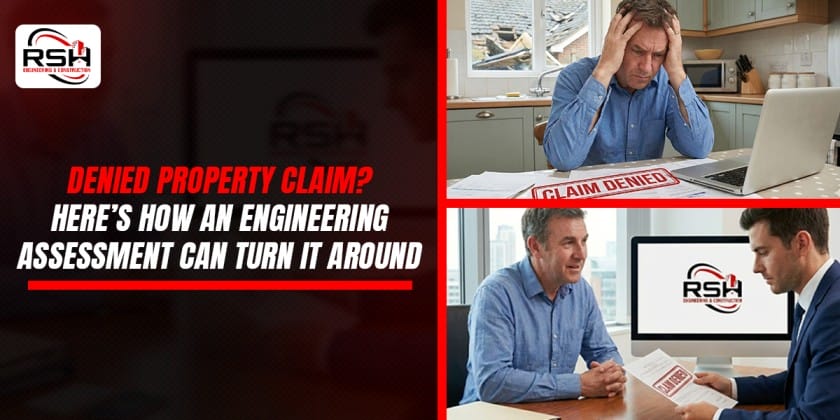
You filed the paperwork. You documented the damage. You expected support from your insurance provider. Yet you are staring at a denied property claim. The good news? It is not over. In fact, an independent, expert assessment can be the turning point of your claim.
Why Are Claims Denied?
Before getting into how you can turn around a denied home insurance claim, let us look at some common reasons behind that denial. Understanding the root cause is the first step towards recovery.
1. Policy Coverage and Exclusion Issues
Many denials arise from misunderstandings around what the policy covers. Your insurer might say the damage is excluded in the policy or that you missed a condition.
2. Documentation & Evidence Gaps
Failing to file quickly, or missing key photos or damage logs can cause issues. Insurance companies look for timely, clear evidence.
3. Cause of Damage Contested
The insurer may claim the damage happened from maintenance lapses or was pre-existing, rather than sudden and accidental. This is where the fight often happens.
4. Flawed or Biased Engineering or Inspection Reports
Yes, a biased engineering report can sway the claim. Some reports (especially those arranged by insurers) may lean toward denying coverage.
5. Missed Deadlines & Process Missteps
Missing the timeframe for filing or failing to review your policy closely can lead to major problems.
When facing a denied claim, it is important to remember that the first denial does not mean the end. This means you must shift strategy. This is where an engineering input comes in.
How an Engineering Assessment Can Turn It Around
You might think of calling someone in as a last resort. But engaging in an independent engineering assessment early can transform your stance.
Why It Works
Here’s how an engineered, technical approach helps:
- It establishes the cause. Rather than arguing with your insurer, a detailed evaluation shows what and why it happened.
- It focuses on evidence, not just opinion.
- If the engineer hired by the insurer says damage is pre-existing or wear and tear, your independent expert can challenge that with objective data.
- It gives strength to your appeal or negotiation posture.
- It helps you take control of the process and the narrative.
Where to Start
- Contact a reputable firm of certified engineering inspectors who understand insurance claims.
- Ask your chosen team to perform full engineering inspections.
- Ensure they produce a professional report that can be submitted to your insurer.
- Use that report to build your appeal or renegotiate the denial.
Why Engineering Makes the Difference
If you’re wondering, “Does hiring engineers really matter?” the answer is yes. It signals to your insurer that you are serious. It shows you are no longer an amateur. You are well-prepared with professional backup.
Addressing Common Pain Points
Let’s talk about common frustrations and how engineering helps:
- “I don’t know why they denied it.” The denial letter may be vague. A professional assessment gives you clarity.
- “They say it was pre-existing damage.” Independent inspectors can investigate and differentiate between the old damage and the new.
- “I don’t know if the estimate is fair.” The engineering team provides cost validation.
- “I’m afraid the insurer will avoid paying.” With a strong report, you bring weight to your negotiation.
- “I’m stuck; I don’t know what to do.” Working with a firm like RSH Engineering & Construction involves handling documentation, reports, and claim support.
Why You Should Act Now
If you are reading this with a wish for property insurance claim help, delaying is risky. Questions likely running through your mind:
- “Will I ever get paid?”
- “Did I do something wrong when filing?”
- “How much more time and money will this cost me?”
By acting promptly with a professional assessment, you shift from waiting to doing. That shift often changes the outcome.
Step-By-Step: From Denial to Appeal with Engineering Input
Let’s walk through the steps so you know what to expect and how to act.
Step 1: Understand the Denial
Before you call anyone in, you must know why your claim was denied. Review the denial letter carefully. It should state:
- Which policy clause was cited?
- What evidence did the insurer use?
- Whether you missed a filing deadline.
- Whether the insurer believed the cause was excluded or the damage was pre-existing.
Step 2: Gather What You Already Have
Now compile all your existing documentation:
- Photos/videos of damage.
- Initial repair estimates or contractor invoices.
- Correspondence with the insurer or adjuster.
- Your full insurance policy.
- Any inspection or damage reports you already have.
Step 3: Engage an Engineering Assessment
At this stage, call in a structural expert or a full-service engineering firm. Their role is to verify, document, and analyze. They will:
- Perform physical inspections.
- Use tools such as infrared imaging, moisture meters, drones, etc.
- Determine causation
- Produce an impartial, detailed professional engineering report you can use.
The Content of the Engineering Report
Your report should include:
- Clear description of the property and damage visible.
- High-resolution photos and annotated diagrams showing failure mechanisms.
- Analysis of the damage timeline and cause.
- Expert opinion on whether the damage is covered under your policy.
- Repair or replacement scope of the findings.
Step 4: Re-Submit or Appeal Your Denied Property Claim
With your technical report in hand, you are ready to act.
- Draft an appeal letter referencing the denial, the coverage clause from your policy, and your new evidence.
- Attach the engineering report along with your original supporting documentation.
- Reach out to your insurance adjuster or claim representative and request reconsideration.
- Keep detailed records of all communications.
From Denied Property Claim to Approved Settlement
A denied property claim is disheartening, but it is not the end. With the right inspection and engineering analysis, you can rebuild your claim with credibility. When you provide measurable proof of cause and damage, your appeal becomes undeniable.
Conclusion
RSH Engineering & Construction provides precise inspections and the credibility your denied property claim appeal needs. Every line of their professional report strengthens your case and moves you closer to payment. Their reports speak the language insurance companies cannot ignore.
Let us help you recover what’s rightfully yours. Contact us now.
Frequently Asked Questions About Denied Property Claim:
Q1. Can I appeal a denied property claim?
A1. Yes. You can appeal by providing new evidence, like an independent engineering report.
Q2. How does a professional engineer help with insurance claims?
A2. Engineers provide expert reports that prove the cause and extent of your property damage. It makes your appeal stronger.
Q3. When should I hire a structural or foundation inspector?
A3. As soon as your claim is questioned or denied. They provide credible, technical validation before appealing.