Drone roof inspection means using drones to reach every place to take pictures of roofs internally or externally. Even after using drones for roof inspection, it doesn’t mean you don’t need a forensic engineer. Drones still can’t help in finding the cause of damage, the seriousness of the issue, and whether it is connected with the storm, construction defects, or other problems. Understanding this concept will help you and other owners make informed decisions.
What a Drone Roof Inspection Can Show
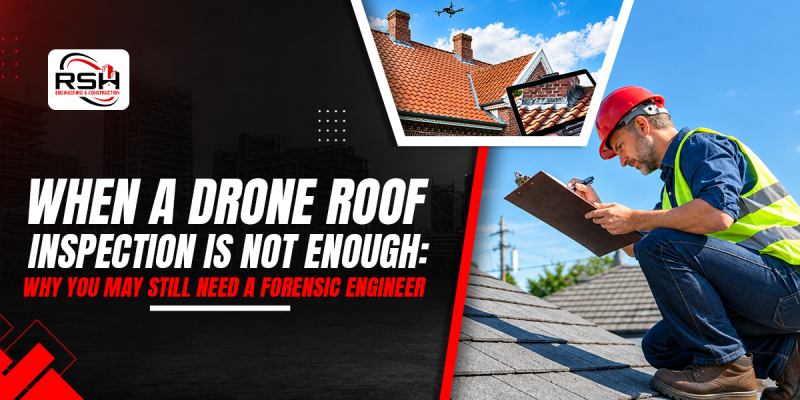
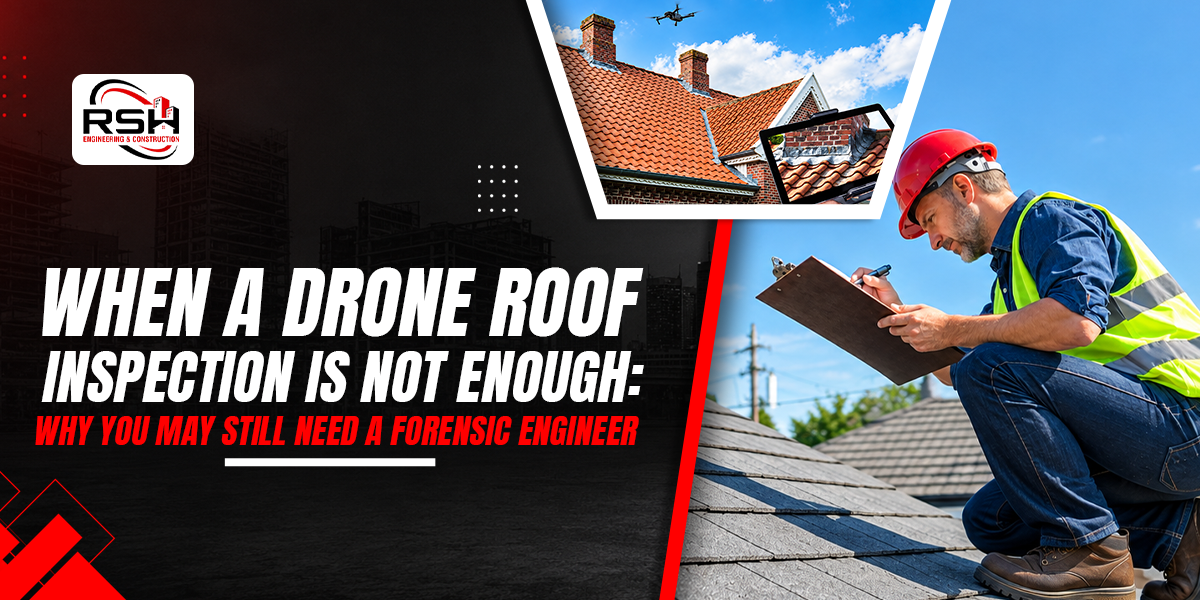
In a drone roof inspection, you can get clear pictures of your roof, which can help to identify loose material, collection of water, damaged flashing, missing shingles, and visible impact marks.
Besides climbing using ladders and the risks for both owners and inspectors, this advanced technology in building inspection helps by making inspection faster and safer.
Having pictures of your roof can help provide a clearer picture or story. Interior damage, risks, and responsibility for these damages require a deeper evaluation by forensic professionals.
What Forensic Engineering Does Differently
When you need a roof damage inspection and consult engineers for inspection, it means you choose a way that looks beyond surface-level damage. They have their expertise in evaluating your roof, which will clearly tell them all about the damage, and they stand with you in legal or insurance matters.
Engineers will clearly evaluate your roof system, building structure, materials, drainage patterns, site condition, and other possible causes. The main goal of this inspection is to determine what happened, why it happened, and whether the damage is consistent with the reported event.
This forensic roof inspection, done by professional engineers, helps owners in handling insurance claims, legal disputes, or repair planning.
Important Signs When You Need a Forensic Engineer After a Drone Inspection
Drone inspection helps owners and inspectors to get clear images of any roof area internally or externally. Today’s technology makes the inspection process easy, but it doesn’t mean it will replace engineers in the inspection.
Home and property owners may require a detailed forensic engineering inspection if they notice the following signs.
- Crack in the structure
- Material issues
- Leakage in the roof after a storm
- Interior wall stains
- Frequent drainage problems
- Disputed insurance claim findings
- Large commercial or public building damage
- Damage unmatched with visible roof photos
- When the concern is related to wind, hail, or structural movement
In any situation like the one given above, owners will require an engineering inspection, which will give a broad overview of the roof inspection.
Drone Inspection vs. Forensic Inspection by Engineers: Which Matters for Insurance
When it comes to finding the cause of the damage to the roof area, drone technology supports the inspection by providing clear pictures of the roof. The inspection also requires forensic engineers who will evaluate these pictures and make a detailed report.
This comparison table helps to distinguish between the two and understand them in a better way.
| Inspections | What It Helps With | Limitation |
| Forensic Engineering Inspection | Engineers evaluate cause, extent, and relationship to storm or building conditions. | Engineers will require professional site assessment and technical analysis. |
| Drone Inspection | Captures roof images and visible surface damages. | Can’t explain the cause, severity, or structural impact |
These two inspections are helpful to the owners in different ways, but they serve different purposes. Drone inspection can only help in taking clear pictures of the roof damage and some visible damage, whereas forensic engineering after property damage will help to find the clear cause of the damage and file claims.
Insurance claims are an important part of this inspection, which helps the owners to repair the damages. The cause of the damages is directly related to the insurance claims. This damage may be caused by wind, hail, poor installation, age, maintenance issues, or construction defects.
Drone photos may not be as effective and supportive when the claim is disputed and will require forensic engineering services.
In any structural roof inspection, engineers, after a complete evaluation, prepare clear documentation, technical reasoning, and professional findings that support filing insurance claims.
Conclusion
Roof inspections are often done using drones to help owners and professionals get clear pictures of the roof, which support this inspection. A forensic engineer identifies the cause of the damage, prepares reports, and supports insurance claims. RSH Engineering & Construction provides drone roof inspection and forensic engineering services to help owners identify the damage caused and support them in insurance and legal claims.
Frequently Asked Questions on When a Drone Roof Inspection Is Not Enough: Why You May Still Need a Forensic Engineer
Q1. When is a drone roof inspection not enough?
A1. When the damage is not visible in drone pictures and requires engineers for a deeper inspection.
Q2. Why do I need a forensic engineer for my roof?
A2. Occasionally the damages are deep, which require engineers to determine the cause and prepare reports for insurance and legal claims.
Q3. What can a drone miss during a roof inspection?
A3. A drone can miss deep-rooted damage and the cause of that damage, but engineers can identify it.